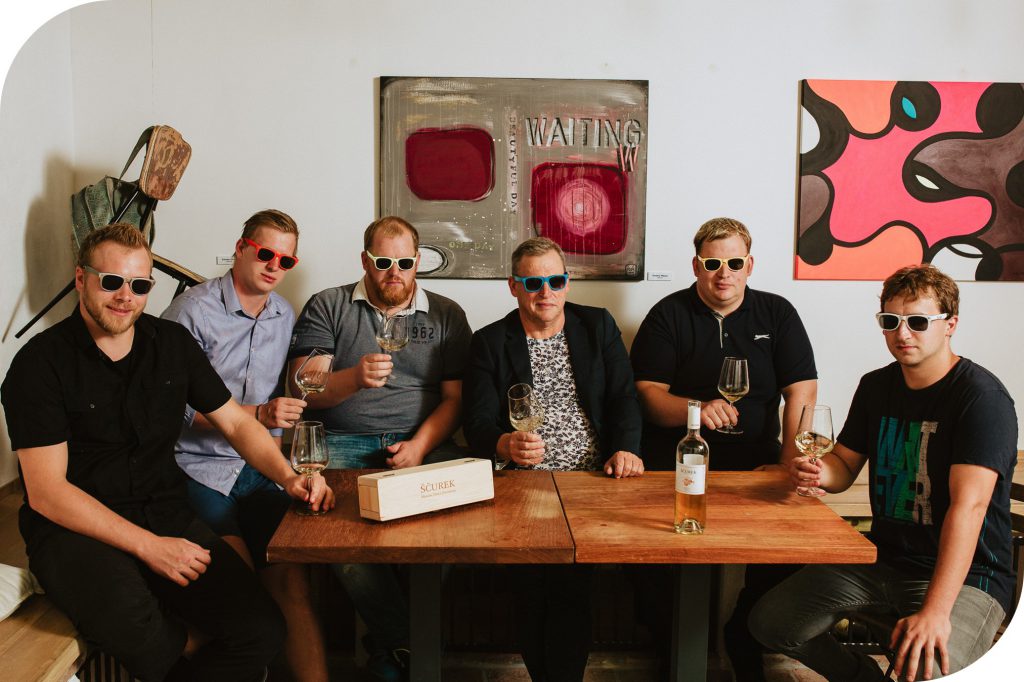
How to cooperate with ‘Sao Bao’ and ‘Suffering’? With such a opposite character and trait, it is perfectly reflected in the way of the Scurek Winery family in an artistic way! The old owner, Mr. Stojan, is a fashionable and ‘saucy’ uncle, who made wine into works of art with his five sons.
‘Orange Wine Revolution’
In the hands of the old village owner, Scurek Winery jumped directly into the Slovenia TOP10 winery from obscurity. 5 sons are in charge of different affairs at the winery, and follow Dad to learn the third child of winemaking TomaZ is the most ‘stunning’ one, but technically, it is better than blue. I have tried all the brewing methods that can be seen in the textbook in my own cellar, and I really do it.adapt to local conditions,follow the laws of nature Make every wine with your heart,Perfect restoration of terroir. Especially in recent years, it has become a popular internationally Orange and Natural Wine on the brewing,The book ‘Orange Wine Revolution’ known as the Orange Wine List by Scurek Winery.
Scurek Winery – Hundred Years of Heritage
It is difficult to describe when the Scurek family started grape growing and wine making with the exact date, but it can be traced back to the law of the great-grandfather of the owner of Mr. Tosyan. Mr. Lang, he started using 1 hectare to produce 5,000 liters of wine about 200 years ago, so he recorded the yearning for high-quality wine in Scurek’s family history. Now the winery has spread to the hands of Mr. Franc’s grandson, Mr. Stoyan and his five young sons.
They take care of the 24 hectares of vineyards together. With the cooperation of 5 sons, Scurek has successfully brewed international high-quality wines, which is unique in the local area!
Art winery of music and art family
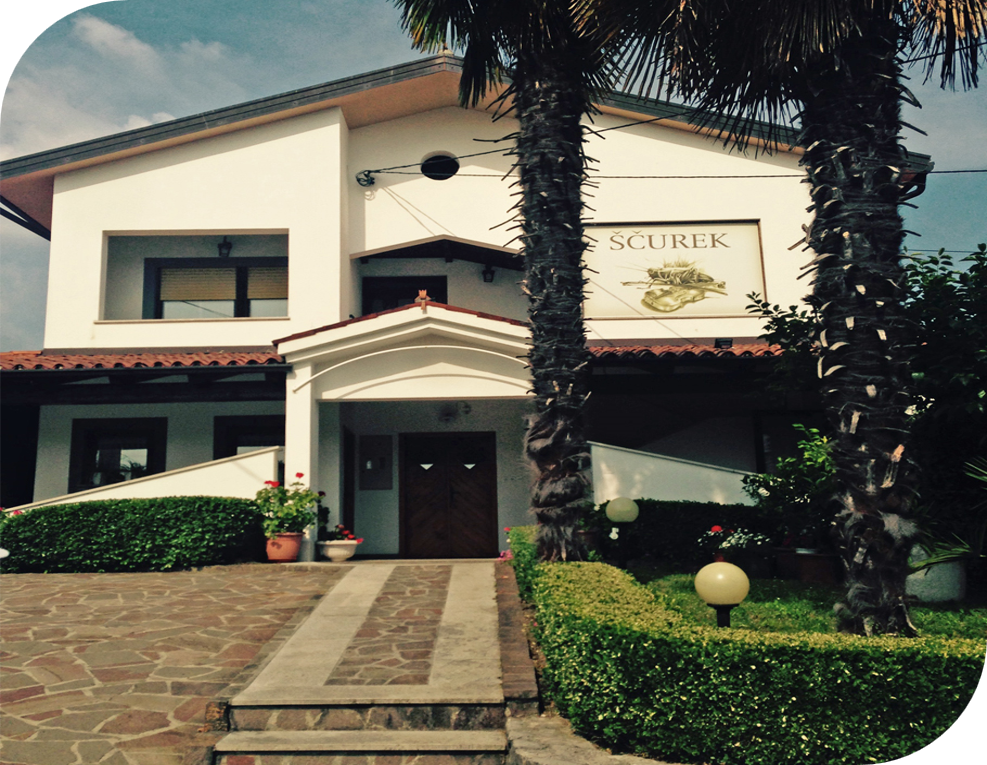
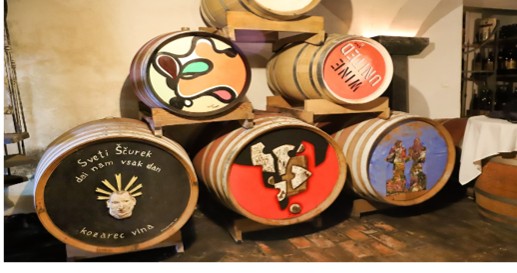
Scurek family is a family of music and art. Whether it is the old owner, Mr. Stoyan or his five sons, have made achievements in literature, painting and music, they will have their own pursuit and understanding of art. It is wonderfully integrated with the management concept of the winery, which is vividly reflected in the wine cellar of Scurek. On the wall and oak barrels, there are all paintings left by artists of different periods.
The Scurek family is also the meeting point of the French Art Association in Slovenia. They often invite local artists to the winery to taste the wine and poems and songs. The wine cellar is always filled with the taste of the artist.
The boring genius winemaker
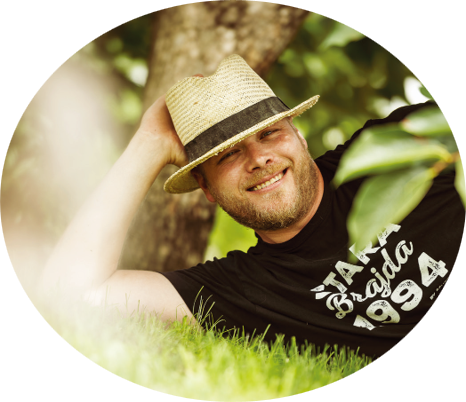
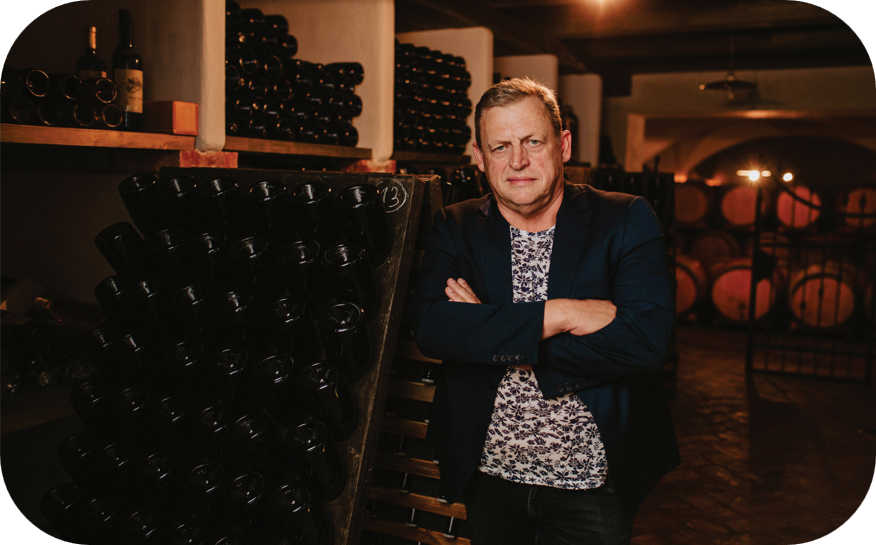
Tomaž ščurek
When I first met Tomaž in charge of brewing, I would think that he was taciturn, shy and boring, and a little shy of a big boy… You are very It is hard to imagine that he is actually a very boring and pure inside, brewing a genius brewer who has made what the industry calls ‘Madman’s Wine.
He insists on a unique winemaking philosophy: ‘Good wine, 90% of which is achieved in the vineyard, only the last 10% is done by the winemaker.’
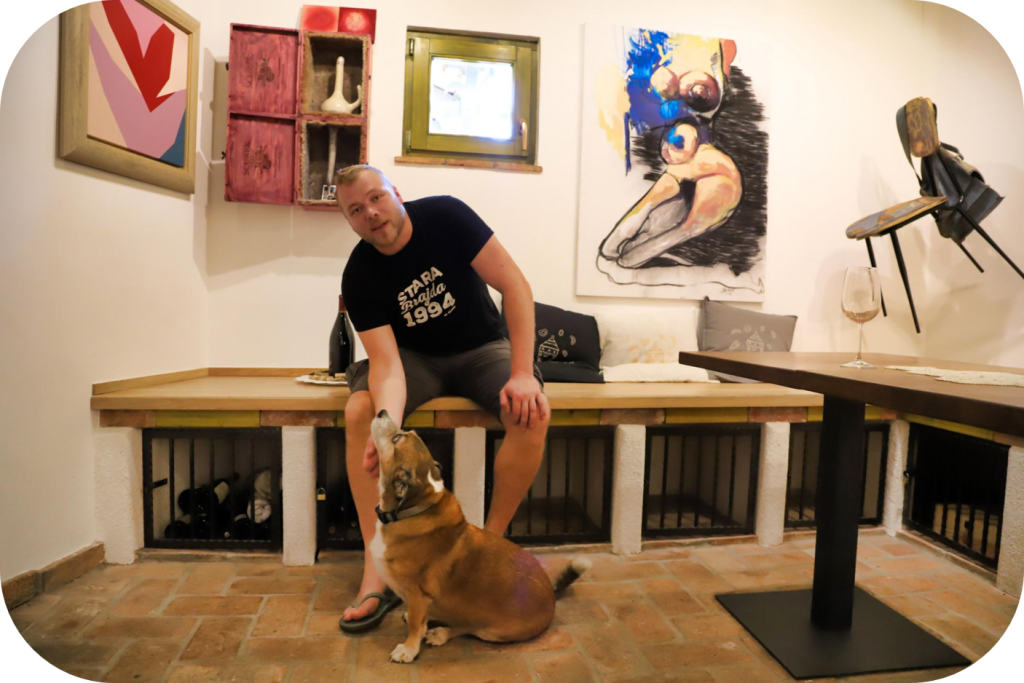
Tomaž and puppy medo
respect nature
Adapt to ‘time, place, and people’
day and day:
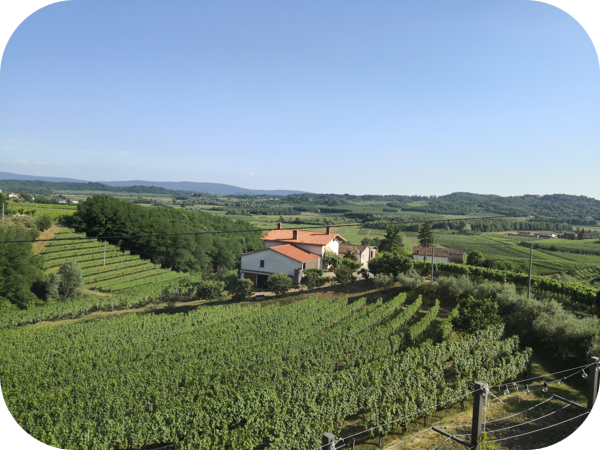
Situated on the border town of Brda, which borders the Collio region of Italy, the Scurek Winery has a 24-hectare Xiangyang vineyard. The winery is all organically grown, and has a very good ecological environment for vineyards. All grapes are planted on a sunny slope at an altitude of about 200 meters, and are affected by the alternating dry Alps and the warm Adriatic monsoon all year round, which is very suitable for the growth and ripening of grapes. The sufficient Mediterranean sunlight gives them a compassionate warmth, and the mountain wind at night brings them a large temperature difference between day and night, bringing the best to the accumulation of sugar.The law of nature.
Land productivity:
The lime soil provides good drainage, and it is precisely thanks to such unique terroir conditions that the quality of the grapes produced by the winery is extremely high.
people and:
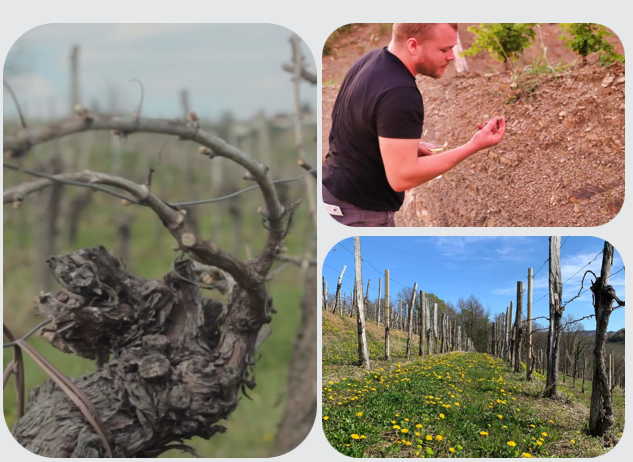
For generations of Scurek winery, several generations have always adhered to the same philosophy and spirit, and worked together to take good care of the vineyard, which makes the old vine in excellent condition can be seen everywhere in the vineyard.
In fact, Scurek Winery has the oldest vineyards in the entire Brda region:
60-80 year old Gredic (also known as Brezic) mixed breed garden, planted with the oldest local breeds of Malzea, Fleno and Rebula;
The oldest international variety vineyard –50 years of rattan’s Dugo old garden, mixed with Chardonnay and Ribula;
It is worth mentioning that40 Years of Fuji Age’s Pinot Single Garden, is also one of the few local old rattan gardens. The craftsman spirit and the collaboration of unity have made 90% of the best prerequisites for the best natural wine and orange wine.
Philosophy of winemaking that is willing to share
In Slovenia, Scurek Winery also often plays an important role in sharing winemaking technology in the ‘Boutique Family Winery Association’. As Mr. Stoyan, the old owner of the poem, emphasizes: ‘It is a long process to share the beauty in our hearts with everyone, but the joy that sharing with us is the driving force that drives us to persevere. : On the one hand, it is eager to show the huge potential of our vineyard, and on the other hand, we strive to balance the upcoming new project and the tradition of Scurek, which is our commitment to the indigenous grape varieties.’
Young cool and natural innovative style
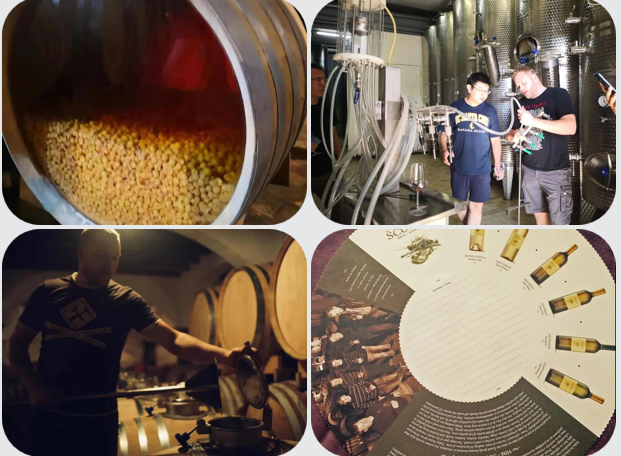
Tomaž has always loved the soil and art of Slovenia, in order to make the terro of the Brda region and its winemaking tradition and ancestors stay The spirit of craftsmanship has been carried forward as much as possible, and has been valued and recognized by the international market. He often conducts various experiments in vineyards and cellars.
For example, compare or mix and match between local and international grape varieties, experiment with new cultivation techniques, control fermentation operations, and improve fermentation methods, Use oak barrels of different types and sizes to measure the aging ability of different types of barrels, as well as control the aging time of wine before the market, and so on. In other words, he has tried both traditional and innovative methods in textbooks.
Another example is the exploration of the barrel, entering the wine cellar, you will find that there are different specifications of oak barrels and stainless steel barrels. The method of using the barrels of each wine is different, and it depends entirely on the development of the wine itself. In the fermentation method, he will also talk about it: cold soaking method, fermentation dipping method, typical impregnation method, post-fermentation immersion method, soft film dipping method…
After many years of hard work, Scurek Winery has continuously innovated while maintaining its local characteristics, showing different styles, and brewing a lot of wine that you are not expecting but extremely delicious, which is highly sought after by wine lovers and enthusiasts.
The ancient and modern orange wine
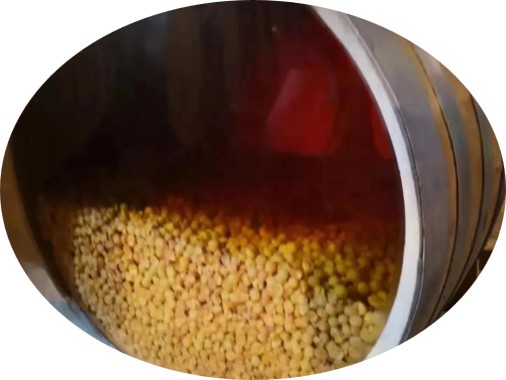
The term ‘orange wine’ came from the hands of British wine importer David Harvey in 2004, and is named after the color of the wine body is similar to orange or amber. In fact, in Georgia, the name ‘amber wine’ has been used for thousands of years.
Orange wine has a very long history of brewing, in Slovenia and Freuile-Venice Giulia, which can be traced back hundreds of years, while in Eastern Europe, especially Georgia, can be traced back to thousands of years ago.
Before the widespread use of modern brewing technology, grapes were soaked or fermented with skin, so that it was easy to squeeze, and the natural tannins on the grape skins were preserved, and at the same time, it could solve the problem of oxidation in the brewing process, because tannins are a natural protective agent. Weaking the white grape skins for days, weeks or months is a common brewing method throughout the Adriatic region.
However, during the 1960s and 1970s, new brewing technologies continued to be introduced, and many winemakers stopped making orange wine.
Until the early 1990s, winemakers in the Brda and Corio producing areas on the Italian and Slovenian borders re-popular the brewing skills of orange wine.
The Mystery of Orange Wine
The key to brewing orange wine isDippingthis process.
Must be dipped with belt pulp, which is also how red wine is made to allow the body to get better color and structure.
We have different types of dipping, depending on the timing and operation of the dipping.
The first is the time point of the impregnation, that is, the pre-fermentation impregnation method, often called cold dipping. Cold impregnation is carried out at 8-15°C, no fermentation is required, and lasts for 6 to 72 hours.Commonly used in oak barrel aged wine and stainless steel barrel fresh wine, so that the wine body can obtain better color, fruity and structure.
The second is fermentation impregnationor a typical impregnation method,Often used in red wine, too.The most popular way of orange wine, so that the color of the wine body is deeper, the tannins are richer, and the structure is fuller. It lasts 3-12 days until the fermentation is completed.
The third isfermentation after fermentation, that is, after the fermentation is completed, it is soaked. This dipping method depends on the specific operation method, and it is also the famous carbonic acid dipping method.For Bojolais new wine, through the whole string of grapes for fermentation, it is often used for the brewing of Pinot Noir.
The fourth is Soft film impregnation, very similar to cold impregnation,Often used in fresh fruity wines.